Five big questions about market turmoil
When markets feel scary, it's no time to act scared
February 25, 2026

We’re only two months into the year, and even though markets are up year-to-date, there’s already been plenty for the markets and investors to fret about — from even more geopolitical tensions, to uncertainty around monetary policy, to increased scrutiny on AI spending. It’s led plenty of clients to get in touch with questions about what to do with their money. And while each investor’s situation is unique, the general themes behind their concerns are not. So we thought we’d tackle the big ones.
“Should I move more money into cash until things settle down?”
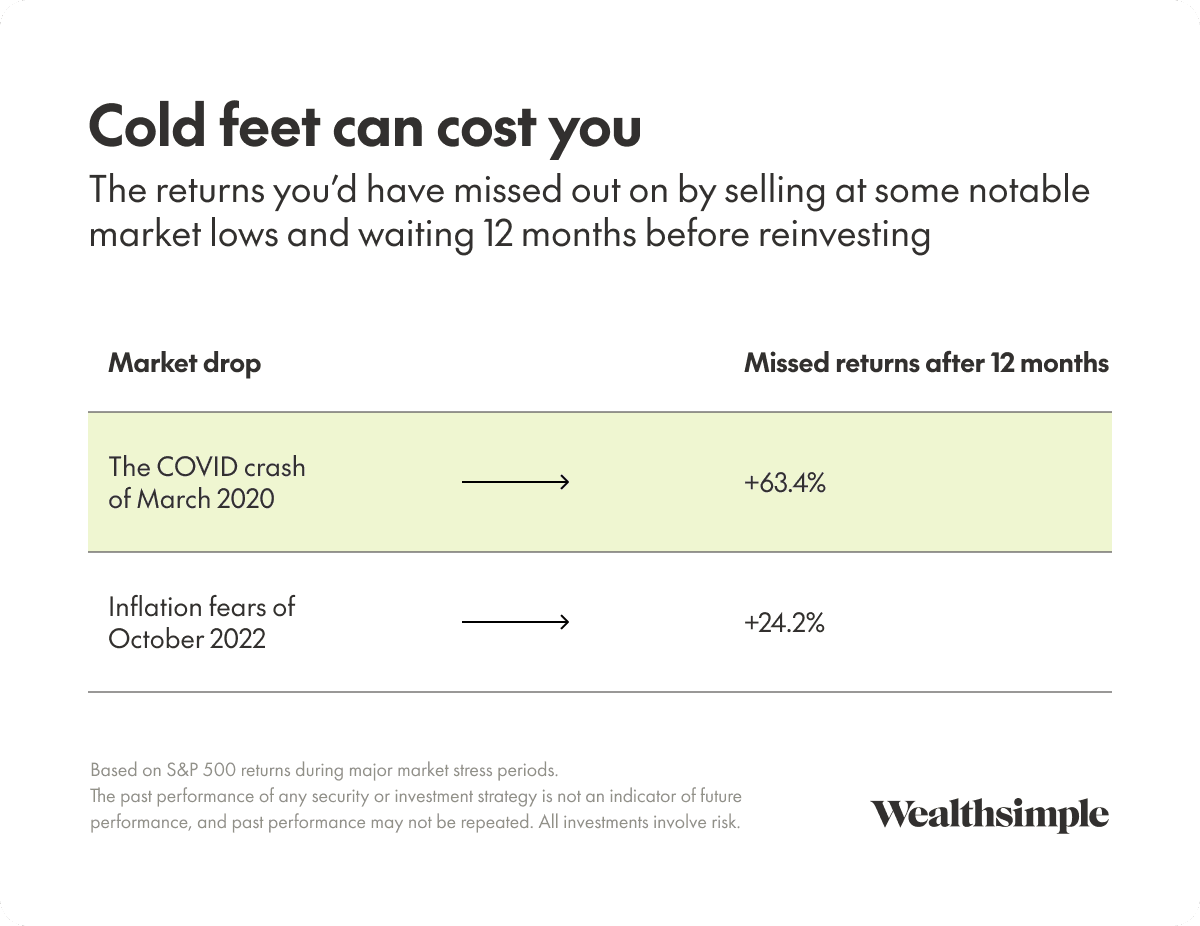
Not only is this one of the most common questions we get, it’s the most troubling. The instinct to “get safe” during scary times makes total sense. But it can be one of the most costly mistakes investors make.
The problem with moving to cash is you have to be right twice: once when you sell and once when you buy back in. Most investors end up selling after markets have already dropped, which locks in their losses. Then they buy back in after markets have already recovered, thereby missing out on the gains.
If your current portfolio setup has you losing sleep, the answer isn't to bail out entirely. It's to adjust your overall risk to something you can actually stick with. If you’re currently at 80% stocks, that might mean shifting to 60%. But it should never mean going to 100% cash. This chart shows you why.
“What about all this geopolitical risk? Won’t that eventually tank stocks?”
The combination of ongoing wars, trade tensions, political uncertainty, and elevated valuations does feel uniquely scary right now. But here’s what history tells us: we’ve been here before. Or at least somewhere quite similar. And while markets were shaken up by those experiences, historically they bounced back. Here’s a look at a few crises investors and markets have been through over the past 40 years.
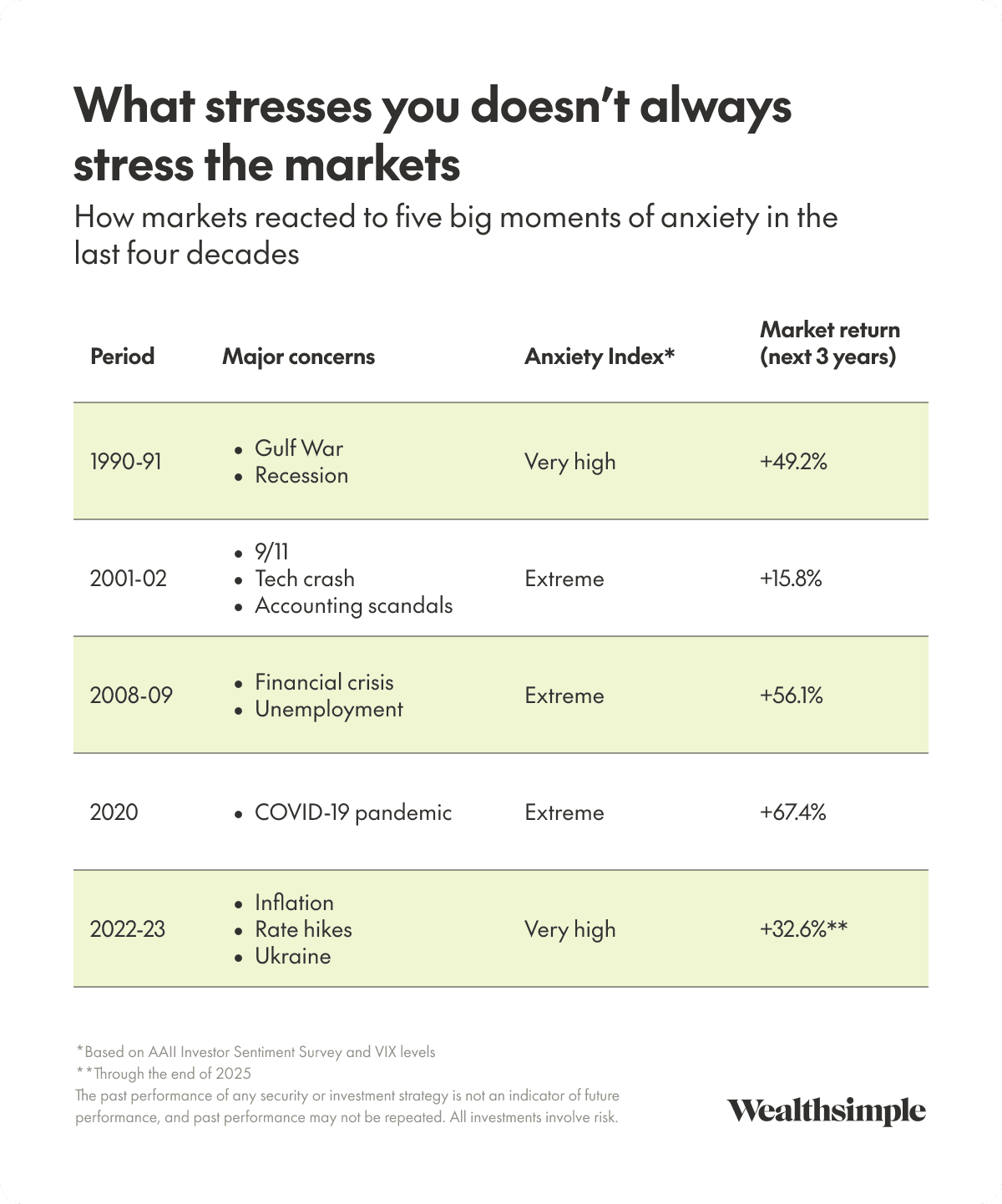
As you can see, periods of maximum anxiety have historically been followed by strong returns for investors who stayed put. This doesn’t mean markets can’t fall further from here, but it does suggest that selling when you’re scared usually means missing the recovery.
“After such a long run, aren’t stocks overpriced?”
Another fair question. Valuations are above historical averages, particularly for U.S. stocks, and especially for tech. But stocks can stay expensive for long periods, and trying to time their peak gets you right back into the same problem we talked about in the first question about moving to cash.
Here’s a look at three different investment strategies based on equity valuations, and how each would have performed over the last 34 years on the S&P 500.
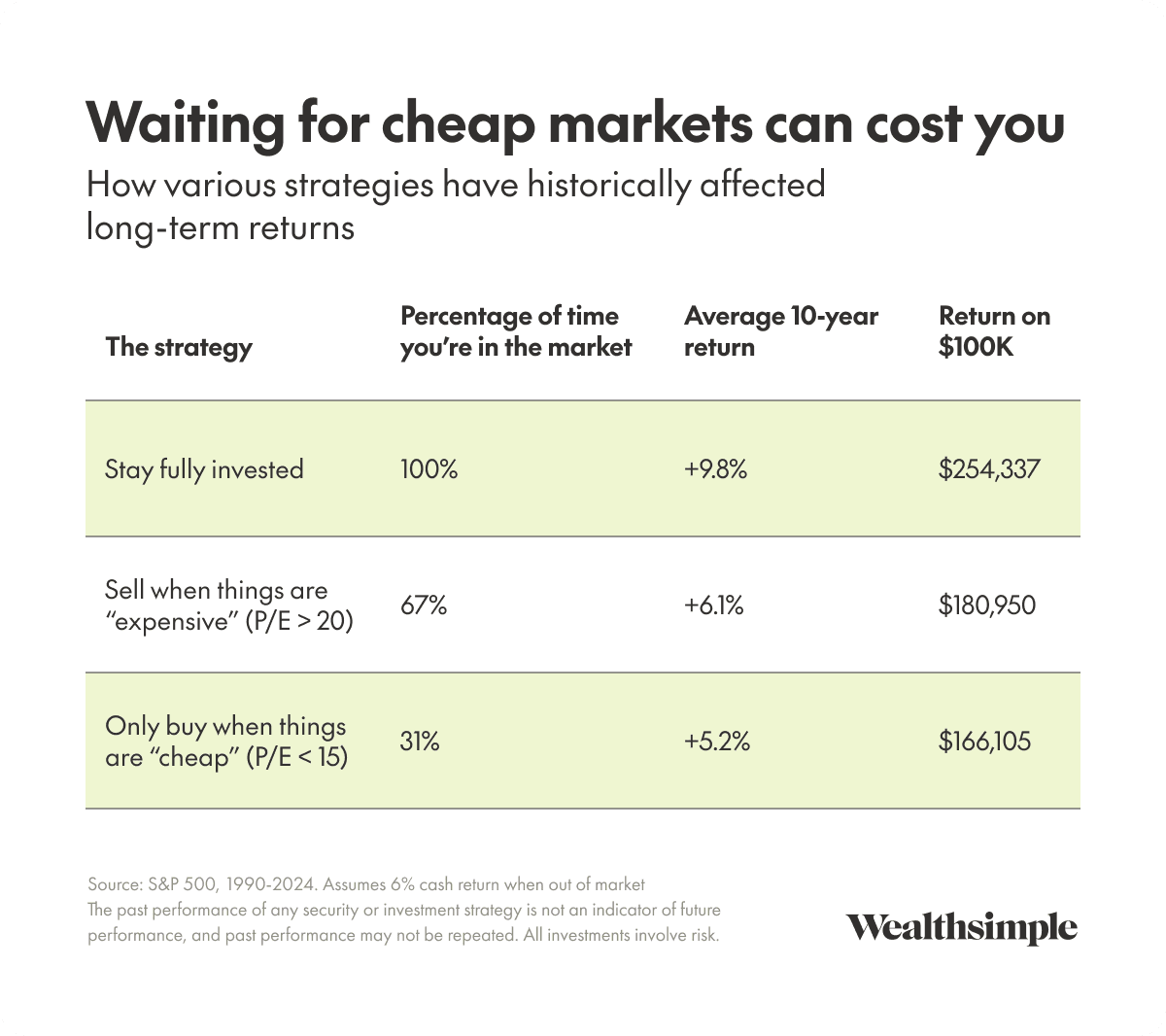
You can see how the timing strategies based on valuation significantly underperform staying invested, even when stocks are expensive. That’s because you miss dividend payments, you miss the gains that often happen before valuations normalize, and you almost never get the timing exactly right.
If you’re worried about valuations, we recommend ensuring you’re properly diversified across geographies, sectors, and asset classes. That naturally reduces your exposure to the most expensive parts of the market, without pulling your money.
“How concerned should I be about inflation cranking back up? What about deflation or a recession? I’ve seen reports that each might be coming.”
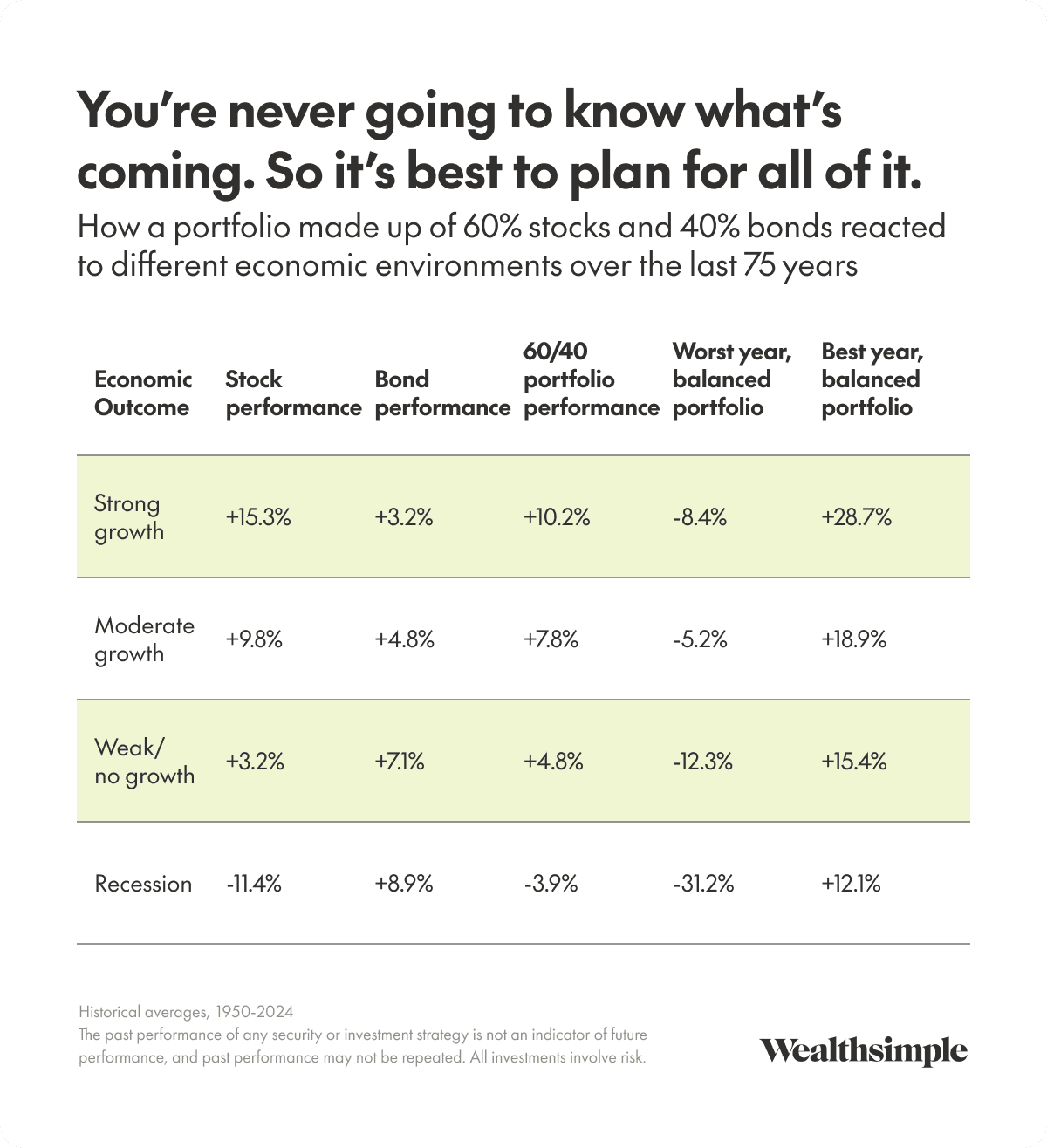
Economic forecasters really are all over the map right now. But even in all of this legitimately confusing uncertainty, the path forward for most investors is the same: a properly diversified portfolio.
It’s designed to perform reasonably well across different scenarios. And while yes, you won’t get maximum returns in every environment, you won’t get devastated in any of them either.
By diversifying, you don’t have to try to predict what scenario will play out and position yourself accordingly. That’s a fool’s errand, and one that even professional economists with unlimited resources regularly get wrong. Everyday investors don’t benefit from pretending they can do better.
“So what should I actually do right now?”
The answer, as it turns out, is pretty simple.
Three things:
- Review your allocation, but don’t panic-sell. Make sure your current mix of stocks and bonds still matches your risk tolerance and time horizon. If not, make reasonable adjustments. So if you haven’t unclenched your jaw yet this year, you might want to lower your risk level a step or two.
- Keep contributing if you’re still accumulating. So much of building wealth starts with building habits. Don’t let the markets, which you can’t control, distract you from your behaviour, which you can. This is especially true if you haven’t reached retirement and are still adding to your investments, in which case market drops are an opportunity to buy at lower prices. That’s good for long-term returns.
- Remember your time horizon. If you’re more than 20 years from retirement, consider today’s volatility to be background noise. If you need the money in the next 2-3 years, ideally you would already be in more conservative investments. If you’re not, go back to step 1.
If we haven’t made this clear enough, it’s worth saying one last time: solid investing is about preparing for a variety of market conditions, not reacting to each specific one. So make a plan that includes a diversified portfolio, then stick to it. Even when it’s really hard.

Sources: Historical market data from Bloomberg, S&P Dow Jones Indices. Investor sentiment data from AAII and University of Michigan Consumer Sentiment Index. Economic scenario analysis based on historical recession and expansion periods identified by NBER.
Managed accounts are offered by Wealthsimple Inc., a registered portfolio manager in each province and territory of Canada.
© 2026 Wealthsimple Technologies Inc.